Elassona

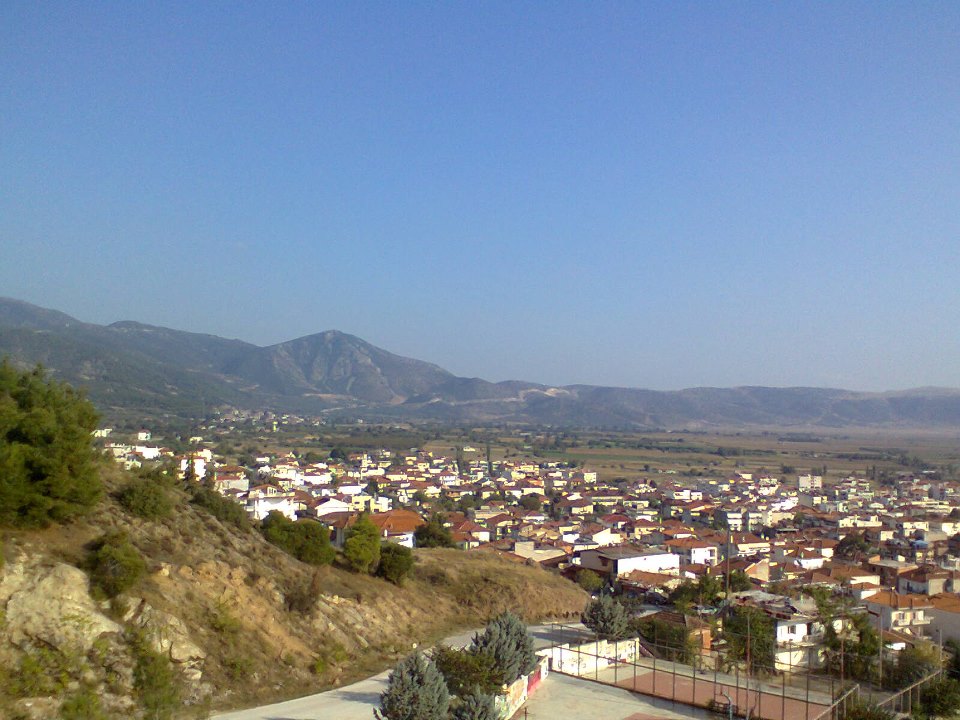
Built amphitheatrically on the southwestern slopes of Mount Olympus, on the banks of the Elassonitis, Elassona is the capital of northern Thessaly: a city with three millennia of history, Byzantine monuments, a lively market and dozens of communities around it.

The ancient Oloosson
In the place of the current city was the Oloosson, a city of the Perrhaebians. Homer mentions it in the Catalog of Ships of the Iliad with the epithet 'white', for the white soil of its hills, among the cities that sent warriors to Troy. Its acropolis was located on the hill where today the Monastery of Panagia Olympiotissa dominates, and there are still ruins and inscriptions. The current name of the city comes, with small changes, from the ancient one.
Byzantium and Middle Ages
In the early Byzantine years, the city, known as Lossonas, was one of the castles that Emperor Justinian (6th century) fortified again, because it controlled the passages from the Thessalian plain to Macedonia. In the 12th century, Eustathius of Thessalonica writes the name 'Elasson' for the first time. Between 1295 and 1304 the Monastery of Olympiotissa was built in the acropolis, and during the reign of Andronikos III Palaiologos, Elassona became the seat of an archbishopric, a position it maintained during the Ottoman rule.
Ottoman rule
During the Ottoman years, the city, known as Alasonia, was an administrative and commercial center of the region. The old neighborhood of Varosi, across the river, still retains memories of that era: the old mosque and the customs building. The mountain communities of Mount Olympus became a refuge for armatoloi and klephts, and in 1821 the Christians of Elassona revolted along with the armatolos of the region. The statue of the legendary Nikotsaras in the central square reminds us of those struggles.
When in 1881 Thessaly joined Greece, Elassona remained outside the borders. The pass of Melouna, south of the city, became the border between the Greek state and the Ottoman Empire.
The liberation of 1912
In 1912, with the start of the First Balkan War, the Greek army passed through Melouna. The victory of 6 October opened the way for the liberation of Elassona and the surrounding communities, and a few days later the decisive Battle of Sarantaporo followed, the first major victory of the war. Every October the city celebrates the anniversary with events and a parade.


Elassona today
The current Municipality of Elassona was formed in 2011 from the merger of nine older municipalities and communities and is one of the largest in area municipalities of Thessaly. Its economy is based on livestock farming, which produces the famous feta and meats of the region, on agriculture, trade, and increasingly on mountain and alternative tourism around Mount Olympus.
In March 2021 a strong earthquake 6 on the Richter scale with its epicenter south of the city caused significant damage to houses, schools, and churches, mainly in the communities. Fortunately, there were no casualties, and reconstruction is ongoing.
The city is crossed by the Elassonitis river, a tributary of the Titarisios that flows into the Pineios. The river separates the old Varosi from the newer city, and its tree-lined banks are the favorite walk of the people of Elassona.

Continue with Sights, Communities, and Nature & Mount Olympus.